ACL Injury Rehabilitation: The Complete Return-to-Sport Guide
ACL Injury Rehabilitation:
The Complete Return-to-Sport Guide
ACL injuries are among the most common and frustrating sports injuries seen in athletes today. Whether in football, basketball, badminton, padel or pickleball, a torn ACL can significantly impact performance, confidence and long-term knee health.
For many athletes, the injury feels overwhelming at first. Questions quickly appear:
Do I need surgery?
How long will recovery take?
Will I return to my previous level?
When can I run again?
Why do some athletes re-injure their ACL?
The reality is that ACL rehabilitation is a long and structured process that goes far beyond simply reducing pain or walking normally again. Returning to sport safely requires progressive strength development, movement retraining, confidence rebuilding and objective testing.
At Vietnam Physio Sport, ACL rehabilitation is one of the main injuries we manage across our Saigon (Saigon Physio Sport) and Hanoi (Hanoi Physio Sport) centers, from early post-operative care to advanced return-to-sport rehabilitation.
What Is an ACL Injury?
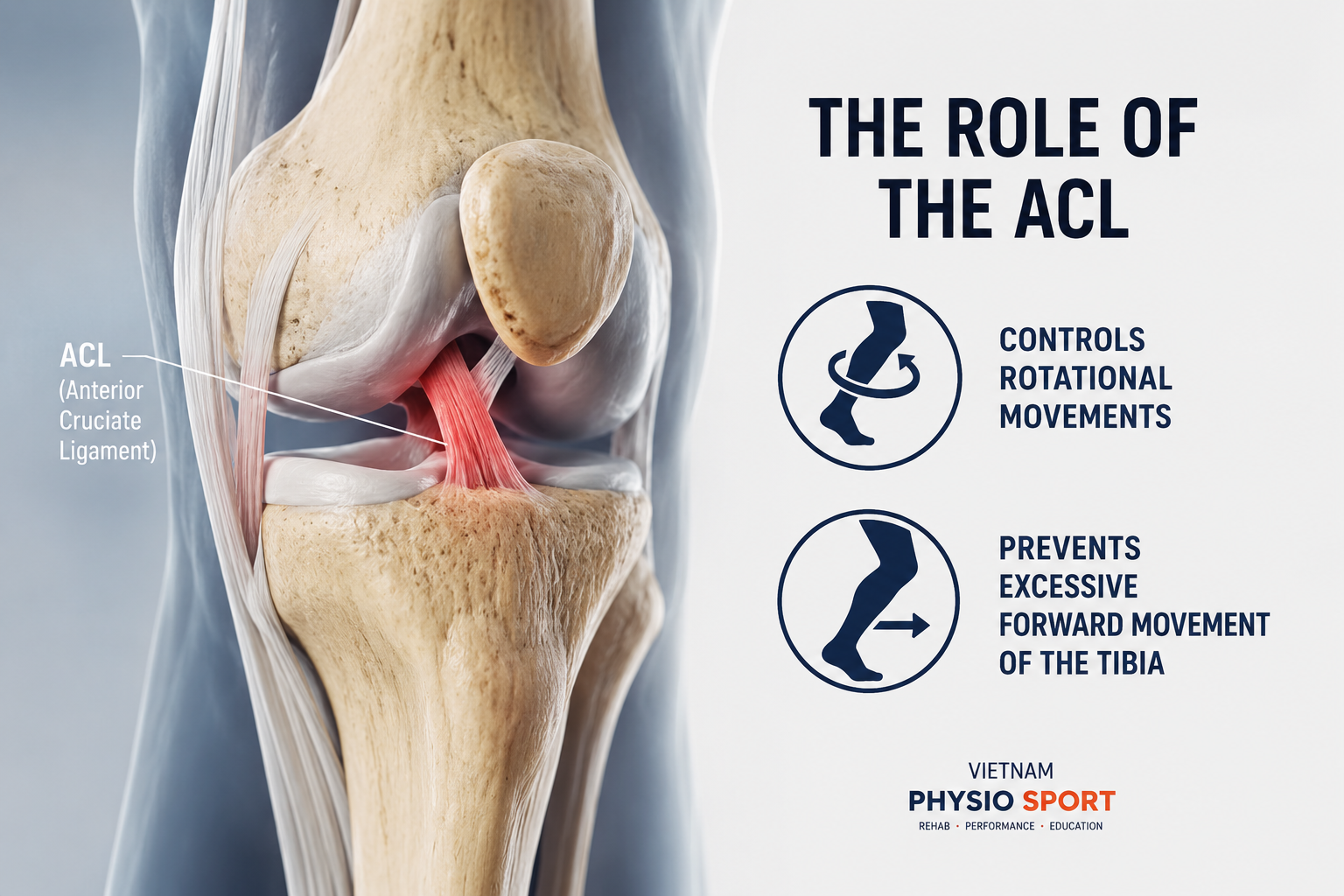
The ACL (Anterior Cruciate Ligament) is one of the main stabilizing ligaments of the knee. Its role is to help control rotational movements and prevent excessive forward movement of the tibia.
ACL injuries usually occur during:
sudden changes of direction
pivoting movements
landing from a jump
deceleration movements
contact injuries
Many ACL tears are actually non-contact injuries, meaning the athlete injures the knee without direct impact from another player.
In Vietnam, we commonly see ACL injuries in:
football players
basketball players
volleyball players
badminton players
pickleball and padel players
martial arts athletes
ACL Rehabilitation Is Not Only for Professional Athletes
Throughout this article, we often use the term “athlete,” but ACL rehabilitation is not only for professional sports players.
At Vietnam Physio Sport, we help patients of all ages and activity levels recover after ACL injuries, from competitive athletes to active adults or youth simply wanting to return to normal daily life.
Proper ACL rehabilitation is essential not only for returning to sport, but also for:
walking confidently
climbing stairs
exercising safely
preventing long-term knee complications
returning to normal daily activities without pain or instability
You do not need to be a professional athlete to benefit from proper ACL rehabilitation.
Common Symptoms After an ACL Tear
Although every athlete experiences the injury differently, several symptoms are frequently reported after an ACL tear.
Common ACL injury symptoms include:
a popping sensation at the moment of injury
rapid swelling of the knee
instability or “giving way”
pain during twisting movements
difficulty changing direction
reduced confidence on the injured leg
Some athletes are still able to walk after the injury, which sometimes creates confusion and delays proper diagnosis.
Clinical assessment and imaging such as MRI are often necessary to confirm the severity of the injury and identify associated damage such as meniscus injuries or cartilage lesions
Do All ACL Injuries Require Surgery?
One of the biggest misconceptions around ACL injuries is that surgery is always mandatory.
The reality is more complex.
The decision depends on multiple factors:
sport practiced
level of competition
instability symptoms
associated injuries
athlete goals
age and lifestyle
Some athletes can successfully return to activity without surgery through structured rehabilitation. These athletes are sometimes referred to as “copers.”
However, athletes involved in pivoting sports such as football, basketball or padel often require surgery if they wish to safely return to high-level activity.
Even when surgery is performed, rehabilitation remains the most important factor influencing long-term outcomes.
Surgery alone is not enough. It is only the first step toward a progressive return to sport.
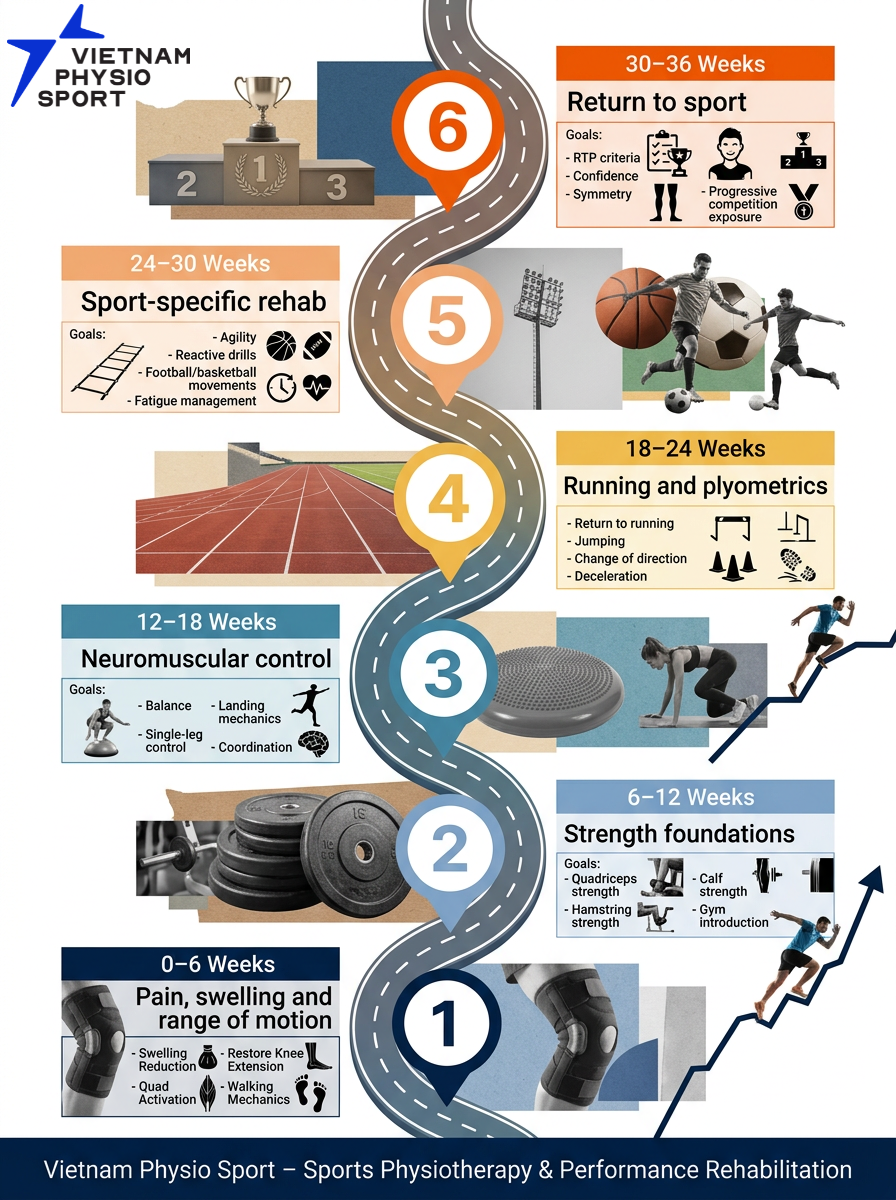
ACL rehabilitation should follow a progressive and criteria-based process from early recovery to return to sport.
The 6 Phases of ACL Rehabilitation
Successful ACL rehabilitation follows a progressive and criteria-based process. At Vietnam Physio Sport, we structure rehabilitation around six major phases.
Phase 1 (0–6 Weeks): Pain, Swelling and Range of Motion
The early phase focuses on:
reducing swelling
restoring knee extension
recovering walking mechanics
activating the quadriceps
rebuilding confidence
Poor extension recovery can negatively impact walking, running mechanics and long-term knee function.
Phase 2 (6–12 Weeks): Building Strength Foundations
Once pain and swelling improve, rehabilitation progressively shifts toward strength development.
Key objectives include:
rebuilding quadriceps strength
hamstring strengthening
calf strengthening
improving single-leg control
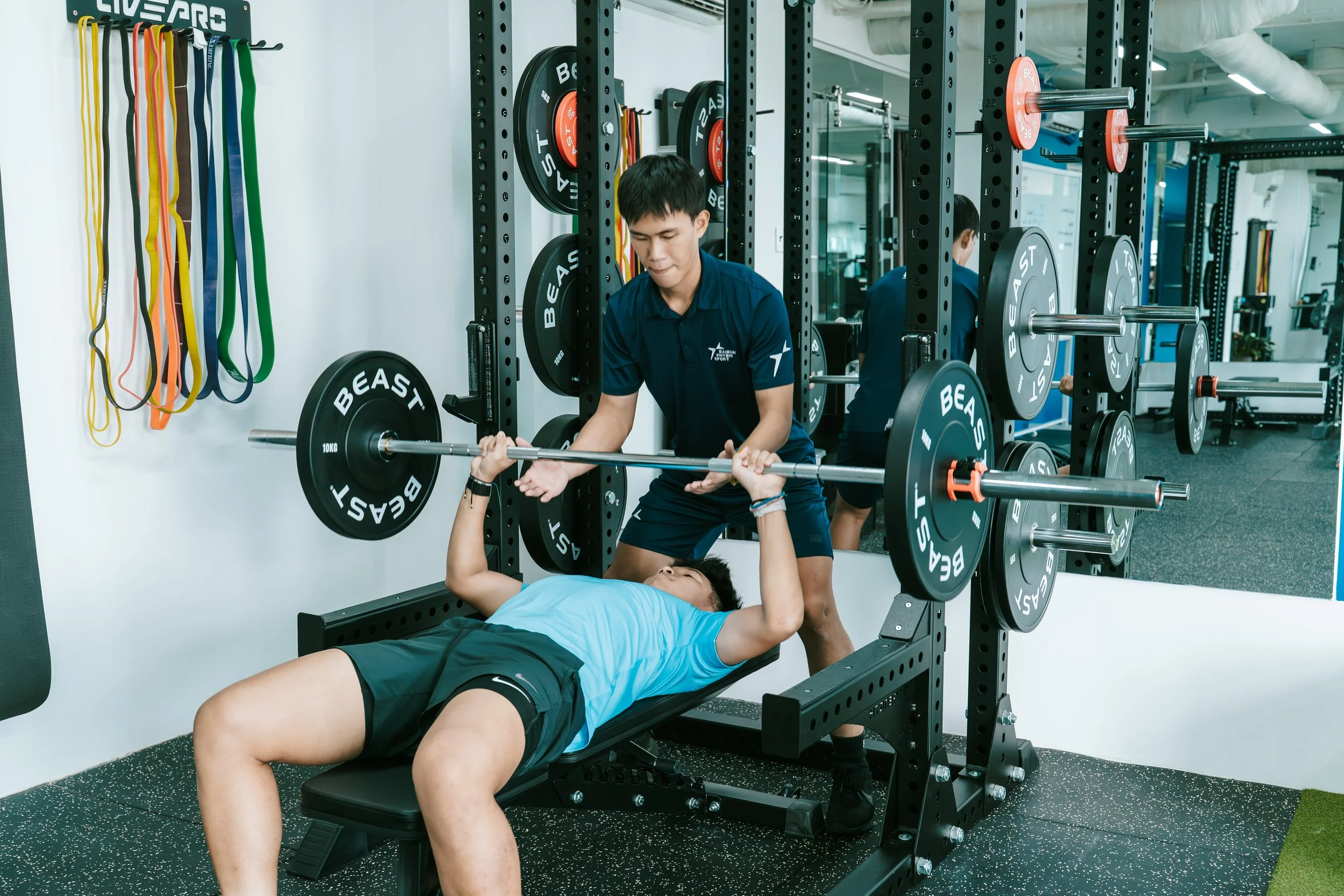
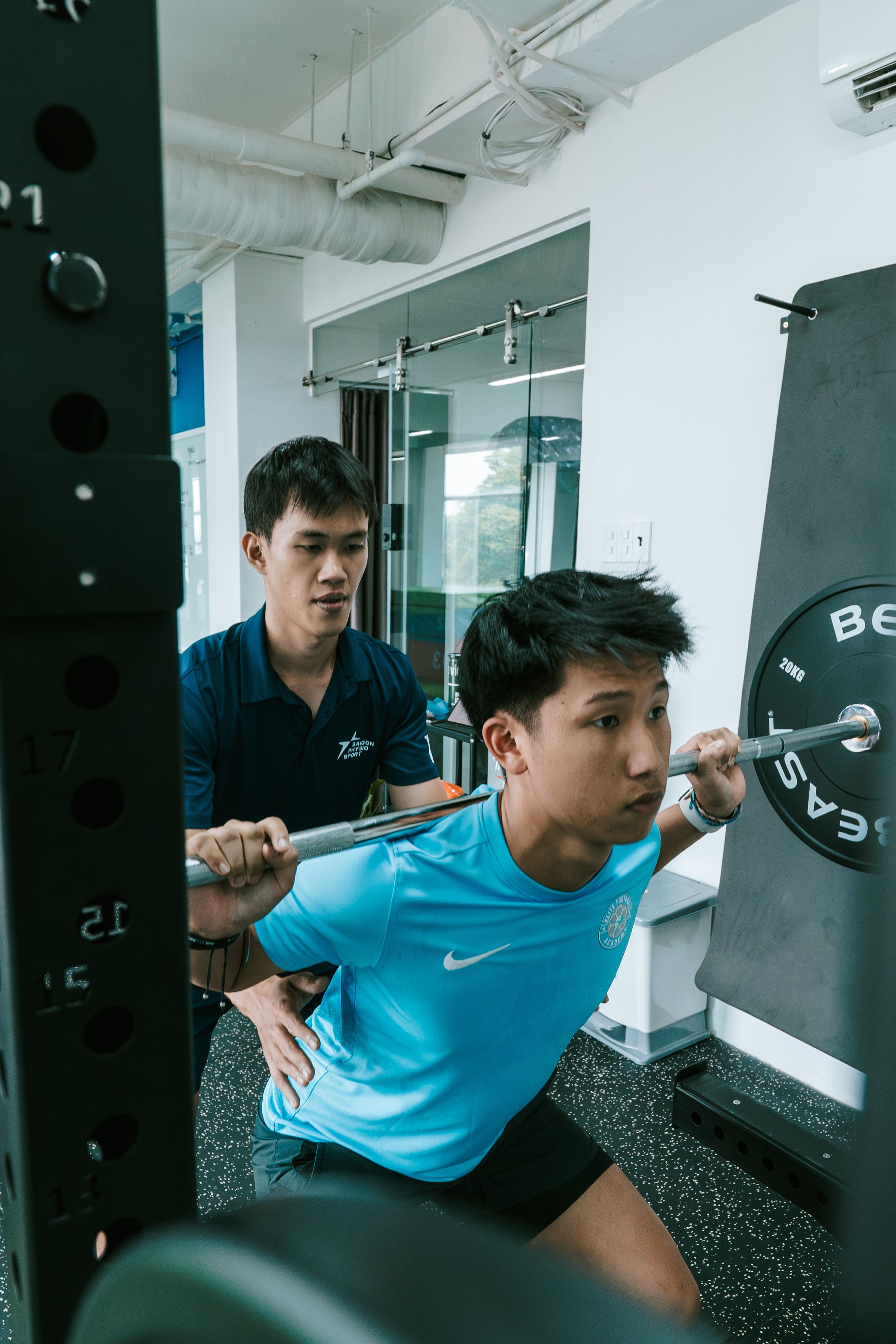
progressive gym exposure
At this stage, many athletes start feeling “better,” but the knee is still far from ready for sport.
Phase 3 (12–18 Weeks): Neuromuscular Control and Single-Leg Stability
This phase focuses on movement quality and control.
The athlete progressively works on:
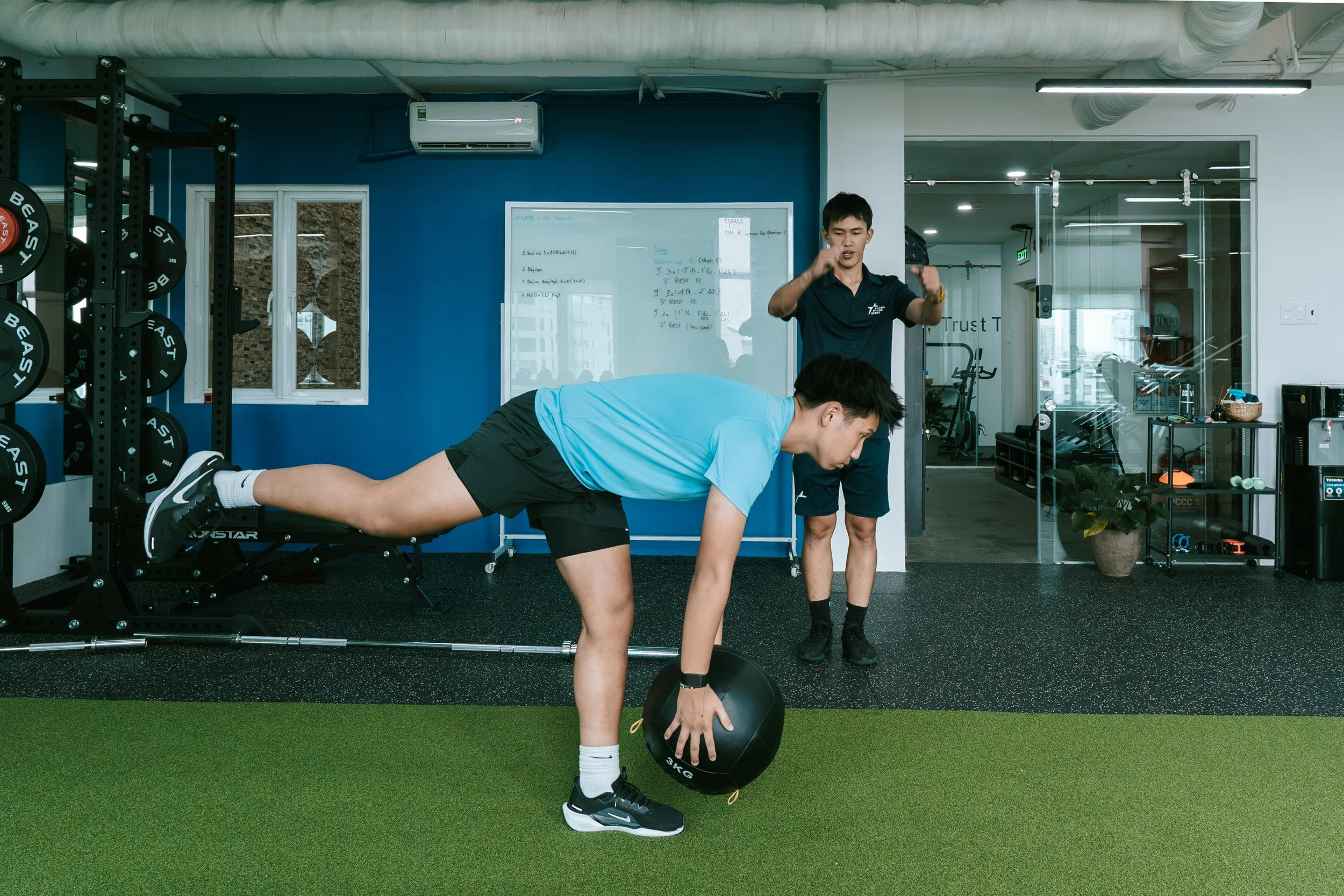
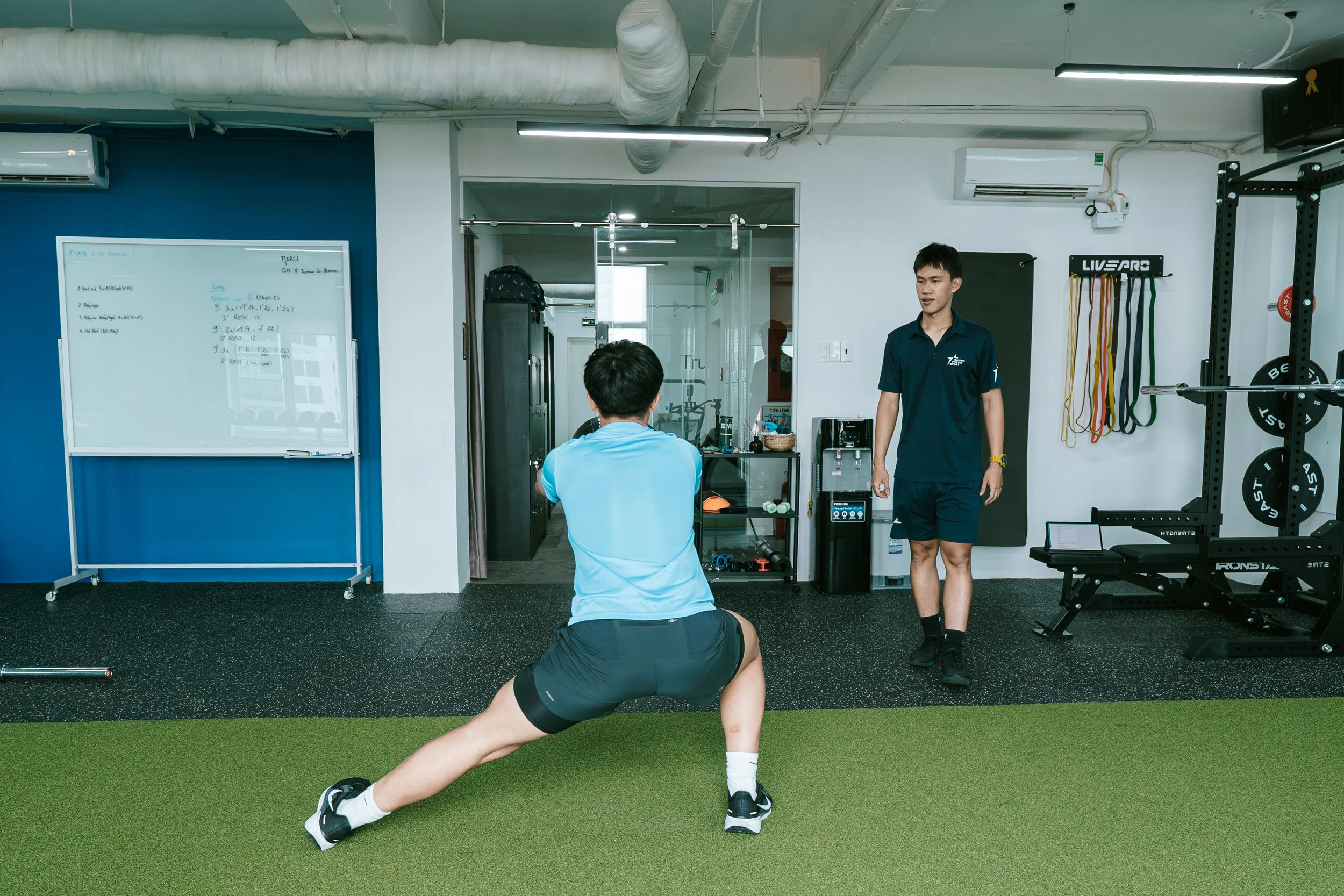
Single-leg strength is an essential component of late-stage ACL rehabilitation.
balance
landing mechanics
force absorption
coordination
single-leg stability
Exercises become more dynamic and sport-oriented.
Phase 4 (18–24 Weeks): Running, Jumping and Change of Direction
The rehabilitation program progressively introduces:
running progression
jumping exercises
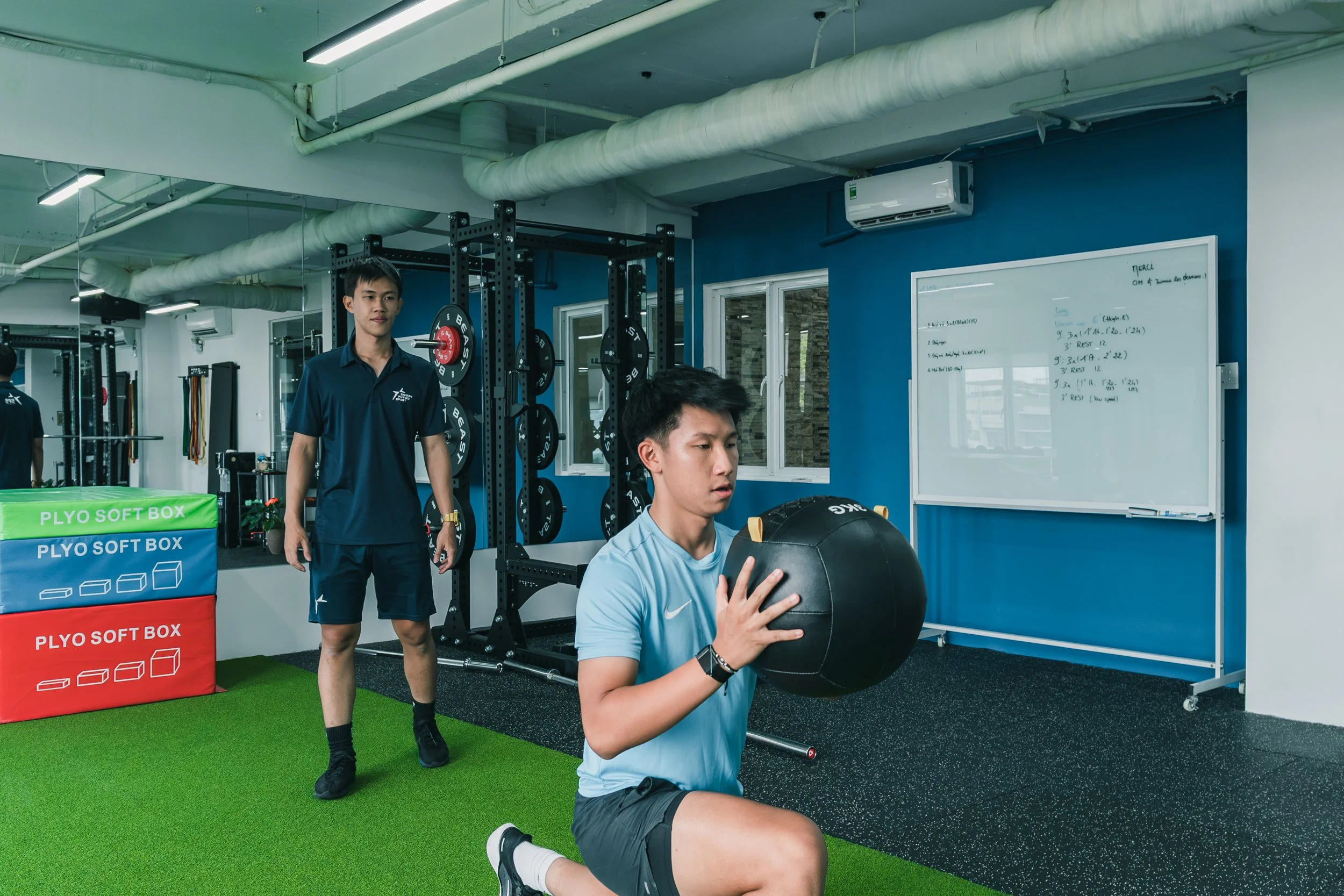
plyometrics
acceleration and deceleration work
cutting and directional changes
Return to running is not based only on time after surgery.
The athlete should demonstrate:
sufficient strength
good movement quality
adequate force absorption capacity
minimal pain or swelling
Phase 5 (24–30 Weeks): Sport-Specific Rehabilitation
As rehabilitation progresses, training becomes increasingly specific to the athlete’s sport.
This phase may include:
reactive drills
agility work
fatigue management
sport-specific movements
decision-making exercises
The objective is not only to “exercise the knee,” but to prepare the athlete for the real demands of their sport.
Phase 6 (30–36 Weeks): Return to Sport
Returning to sport is one of the most critical phases of ACL rehabilitation.
At Vietnam Physio Sport, return-to-sport decisions are based on multiple factors:
strength testing
movement quality
jumping ability
symmetry
confidence
sport demands
training exposure
The absence of pain alone is not enough.

Pain-free movement alone does not mean an athlete is ready to safely return to sport.
Why Many Athletes Re-Injure Their ACL?
ACL reinjury remains a major issue in sports rehabilitation.
Several common factors contribute to reinjury:
returning too early
insufficient strength recovery
poor single-leg control
skipping late-stage rehab
lack of objective testing
psychological fear or apprehension
One of the biggest mistakes is stopping rehabilitation once daily activities feel comfortable again.
In reality, the later stages of rehabilitation are often the most important for long-term athletic performance and injury prevention.
Are You a Physiotherapist Interested in ACL Rehabilitation?
Discover our ACL Masterclass designed for physiotherapists wanting to improve their understanding of modern ACL rehabilitation and return-to-sport management.
How Long Does ACL Rehab Really Take?
One of the most common questions athletes ask is:
“How long before I can return to sport?”
Although timelines vary, full ACL rehabilitation often takes:
9 to 12 months
sometimes longer depending on the athlete and sport
Recovery depends on:
associated injuries
graft type
rehabilitation consistency
strength recovery
sport demands
confidence levels
Returning too early significantly increases reinjury risk.
Modern ACL rehabilitation is increasingly criteria-based rather than purely time-based.
Common Mistakes During ACL Rehabilitation

Common ACL rehab mistakes include:
focusing only on pain reduction
avoiding strength training
neglecting the gym phase
stopping rehab too early
comparing recovery to social media timelines
returning to competition without testing
Athletes often underestimate how physically demanding proper ACL rehabilitation truly is.
ACL Rehabilitation at Vietnam Physio Sport
At Vietnam Physio Sport, we provide structured ACL rehabilitation for athletes across our Saigon and Hanoi centers.
Our approach combines:
sports physiotherapy
strength and conditioning principles
movement assessment
return-to-sport progression
athlete education
performance-focused rehabilitation
Our rehabilitation model emphasizes:
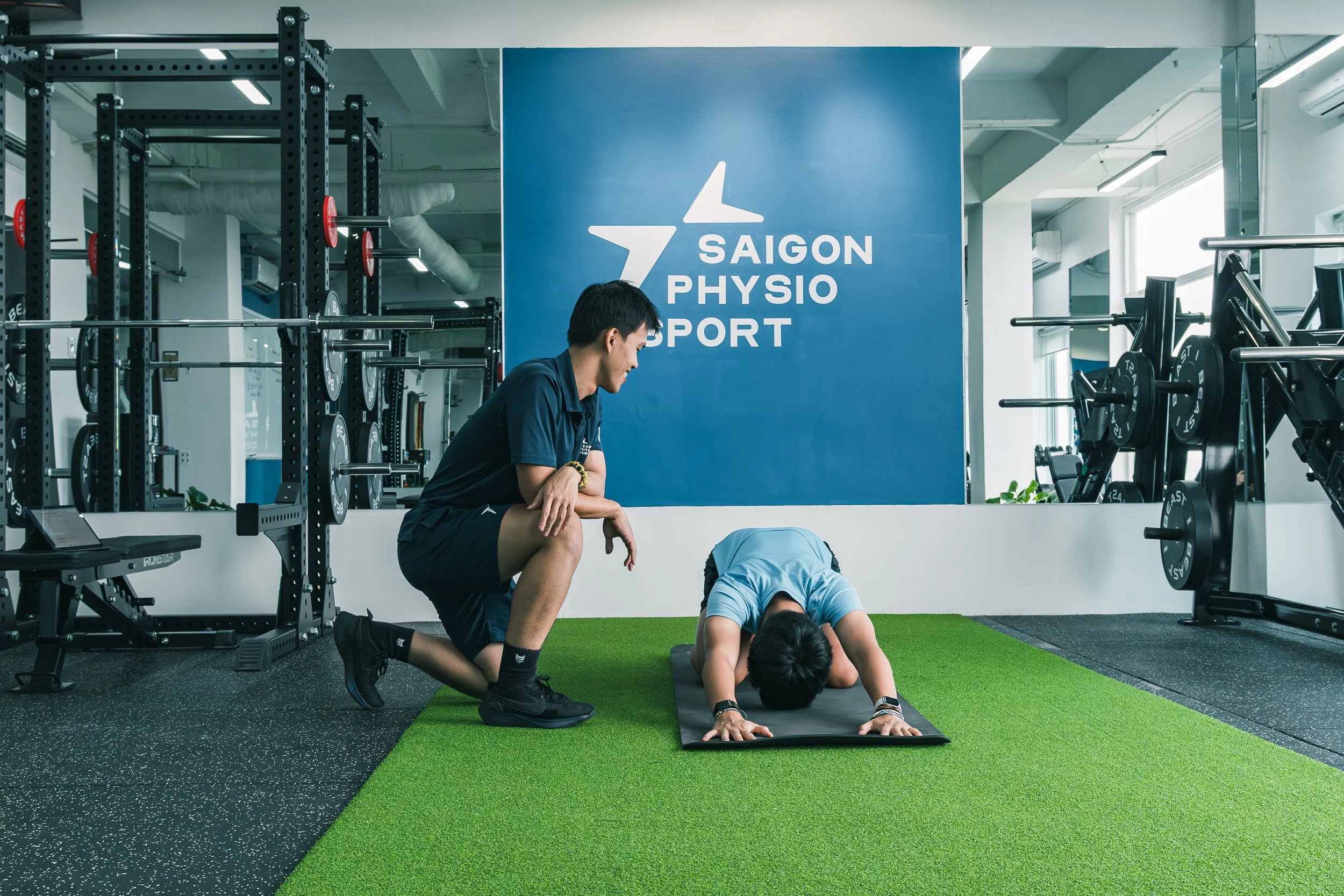
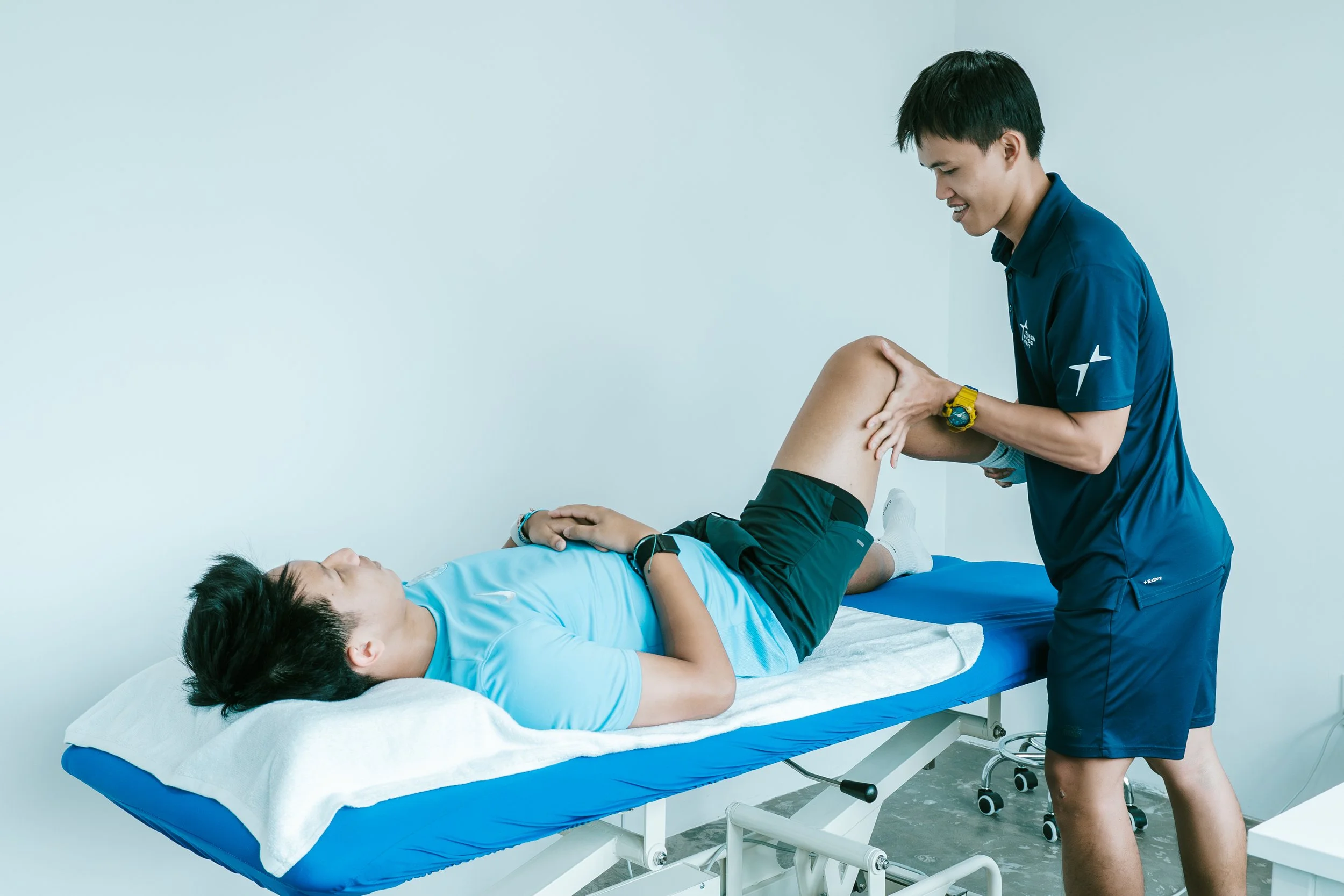
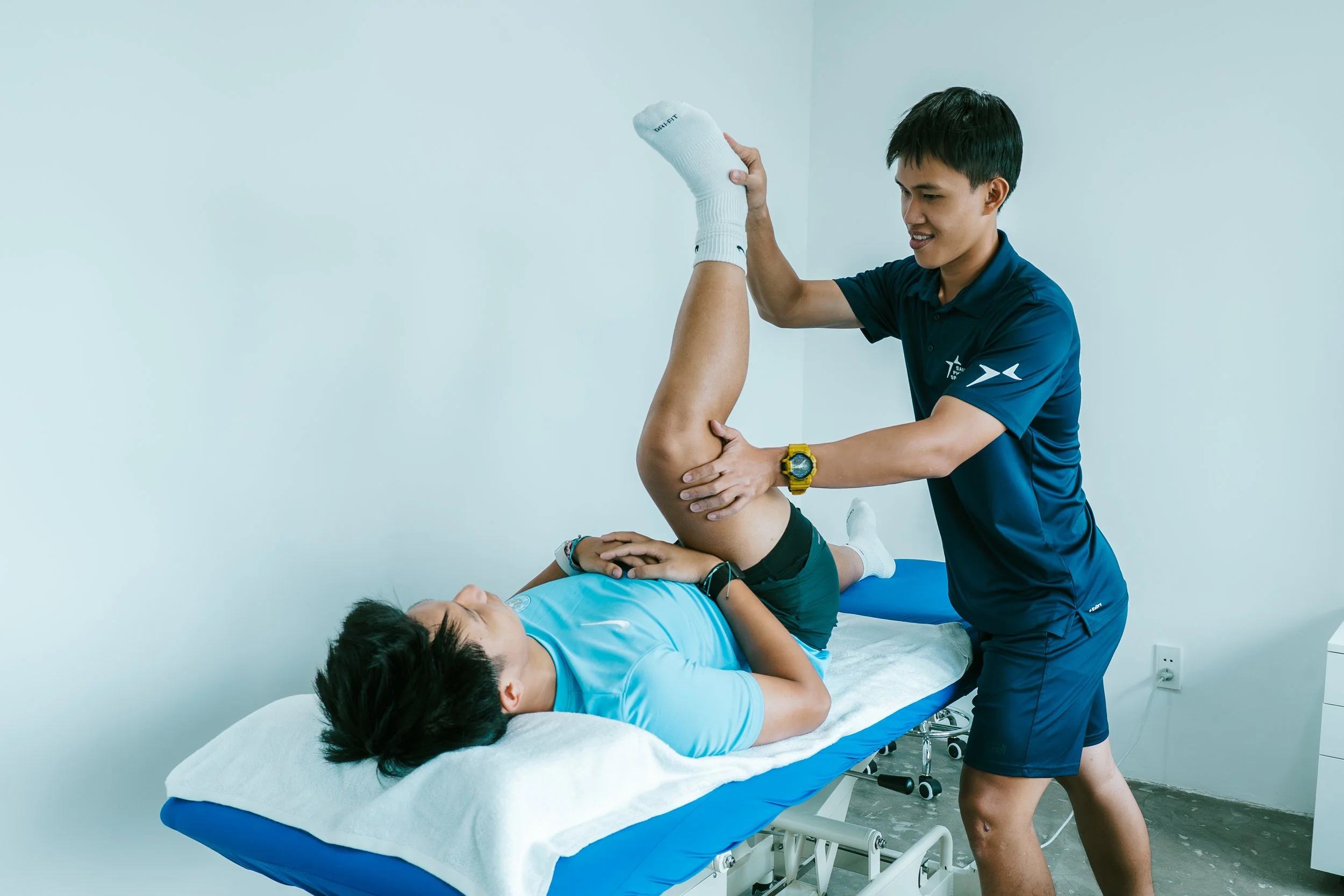
1-to-1 sessions
active rehabilitation
gym-based progression
objective testing
long-term performance
Frequently Asked Questions About ACL Rehabilitation
Can you walk with a torn ACL?
Yes. Some athletes can still walk after an ACL tear, especially once initial pain decreases. However, instability may remain during pivoting or sport activities.
Can an ACL heal without surgery?
Some athletes can function well without surgery through structured rehabilitation. The decision depends on sport demands, instability symptoms and athlete goals.
When can I run after ACL surgery?
Running usually begins between 3 and 5 months after surgery once strength, movement quality and load tolerance meet appropriate criteria.
How long before returning to football after ACL surgery?
Most football players require at least 9–12 months before full return to competition.
Is cycling good after ACL surgery?
Cycling is commonly used during ACL rehabilitation to improve mobility and cardiovascular fitness while limiting knee impact.
Can you fully recover from an ACL injury?
Yes. Many people successfully return to sport and normal daily activities after an ACL injury with proper rehabilitation and progressive return-to-sport management.
What happens if you don’t rehab an ACL injury properly?
Poor rehabilitation can lead to persistent weakness, knee instability, reduced confidence and increased reinjury risk. Proper rehabilitation is essential for long-term recovery.
How do you know if you are ready to return to sport after ACL surgery?
Return-to-sport decisions should be based on strength recovery, movement quality, confidence and sport-specific readiness — not only on the absence of pain.
Still Have Questions About ACL Rehabilitation?
If you would like more personalized advice regarding your injury, surgery or recovery process, our team at Vietnam Physio Sport is here to help.
Conclusion
ACL rehabilitation is a long-term process requiring patience, consistency and progressive loading.
Successful recovery goes far beyond reducing pain or completing surgery. Proper rehabilitation should rebuild:
strength
movement quality
confidence
sport-specific capacity
A structured and evidence-based approach can significantly improve long-term outcomes and reduce reinjury risk.
Looking for ACL rehabilitation in Vietnam?
Our sports physiotherapy team in Ho Chi Minh City - Saigon Physio Sport, and Hanoi - Hanoi Physio Sport helps athletes safely return to sport after ACL injuries and surgery through modern sports physiotherapy and performance-based rehabilitation.